
Cross Canada Moving from Vancouver
Cross Canada moving from Vancouver is a highway job and a paperwork job at once, and Always Best Moving Vancouver plans both before the truck is loaded. We have been moving people since 2010, we run 24 hours a day from 422 Richards Street downtown, and we hold 4.9 stars across 102 Google reviews. Every haul starts the same way: a clear, no-obligation quote agreed up front and put in writing before we start.
Free moving quote
The Two Ways Out of Vancouver
There are two realistic corridors east. The destination and the forecast decide which one your load takes.
Highway 1, the Trans-Canada
Out of the Lower Mainland it runs through the Fraser Valley to Hope, up the Fraser and Thompson canyons toward Kamloops, then east through Revelstoke and Golden. It crosses Rogers Pass in Glacier National Park and Kicking Horse Pass in Yoho National Park. Kicking Horse Pass sits at 1,627 m and is the highest point on the entire Trans-Canada Highway, the crossing where the highway and the CPR go over the Continental Divide from Lake Louise to Field. This is the road for Calgary, Winnipeg and everything east.
Highway 5 to Highway 16, the Yellowhead
Highway 5 is a 543 km route linking Highway 1 to Highway 16, and it is the shortest land connection between Vancouver and Edmonton. Its Coquihalla section, Hope to Kamloops, is a 186 km freeway of four to six lanes that opened on 16 May 1986. North of Kamloops the Southern Yellowhead section runs about 314 km, largely two lanes undivided, through Little Fort, Clearwater, Blue River and Valemount. Highway 16 enters Alberta near Jasper and reaches Edmonton roughly 366 km further on. The Yellowhead itself is a 2,859 km alternate that stays north of Highway 1 through Edmonton and Saskatoon to Portage la Prairie, Manitoba.
The Grades We Actually Climb
The Province of BC publishes elevation and grade profiles for its mountain highways, so none of this is guesswork. On the Coquihalla, the profile shows the climb out of Hope running at 1.5 percent, then 5.4 percent, then 8.5 percent to the summit, then 1.2 percent and 4.7 percent on the descent toward Merritt, across roughly 100 km. Coquihalla Summit is at 1,244 m. Through Rogers Pass, the profile shows 1.7 percent then 6.0 percent climbing between the boundaries of Glacier National Park, and 5.8 percent coming down, over roughly 40 km. Kicking Horse is the hard one: sustained 8 percent, 6 percent, 8 percent and 8 percent pitches climbing out of Golden, and 6 percent approaching the Alberta border, over roughly 70 km, topping out above 1,600 m.
Sustained grade decides how a loaded truck gets packed and braked. Our packing service exists partly for this: a box that survives a city move can still shift on a 40 km descent.
Rogers Pass, and Why Delivery Is a Window
Rogers Pass sits 1,330 m above sea level. Parks Canada manages roughly 40 km of the Trans-Canada Highway through Glacier National Park, covering 135 separate avalanche paths, controlled from 16 gun positions. There are approximately 100 hours of highway closures per year for avalanche control work, and most of them last between 4 and 8 hours. Parks Canada’s winter driving page says a closure can last from 2 to 8 hours or longer.
Parks Canada also warns that rapid changes in elevation and weather make conditions unpredictable, and that a single trip can hit slush, ice, heavy snowfall and compact snow. It cautions against trying to make up lost time after a reopening, because a new incident can shut the road again.
We take that literally. Nobody drives faster to save a promise. That is why we quote a delivery window in writing, not a single date.
Chains, Tires and the Calendar
BC has real rules, and they apply to the truck carrying your furniture. Drivers must obey winter tire and chain signs throughout the province from October 1 to April 30. On select highways away from mountain passes and high-snowfall areas, the requirement ends March 31 instead. It applies outside the Greater Vancouver and Greater Victoria areas, on routes marked with regulatory signs.
The commercial rules turn on the licensed vehicle class. A commercial vehicle between 5,000 and 11,794 kg licensed gross vehicle weight must carry chains or acceptable traction devices, unless fitted with winter tires carrying the three-peaked mountain and snowflake symbol or the M plus S marking. At 11,794 kg licensed GVW and above, steel chains are required on most major highways. Through Rogers Pass, Parks Canada requires mountain and snowflake or M plus S rated tires from October 1 to March 31.
When you compare movers for a winter haul, ask how they handle that calendar. It is one of the questions in our guide on how to choose a mover.
Why a Plan B Is Not Optional
In November 2021, an atmospheric river brought an unprecedented amount of rain to BC just as winter began, damaging Highways 1, 3, 5, 7, 8, 11, 19 and 99. Highway 5 closed on 14 November. Washouts damaged more than 20 sites along 130 km of the Coquihalla between Hope and Merritt, including seven bridges. It reopened to commercial traffic in 35 days, on 20 December 2021.
Since then the Trans-Canada through Kicking Horse Canyon east of Golden opened to full four-lane operation on 30 November 2023. But the lesson holds. Every load we book leaves with a primary route and a second route already chosen.
The Middle Third, Across the Prairies
Once the passes are behind the truck, the risk changes from grade to visibility. Saskatchewan’s Highway Hotline publishes the terminology, so you know what you are reading.
“Travel Not Recommended” means visibility under 250 metres and a highway that could become impassable from ice, snow, snow drifts or extreme weather. “Closed” means it is impassable or shut for operational or weather reasons. Visibility is graded: Reduced is 250 to 500 m, Poor is under 250 m, Zero is under 100 m. At Poor, maintenance equipment will not start work until it improves, and equipment already out may be pulled off.
Surface terms matter too. Partly Covered means two wheels of a passenger vehicle are on snow or ice, Covered means all four. Loose Snow is under 8 cm, Heavy Snow is more than 8 cm with traffic having trouble passing.
The Distances, and Why They Become Days
Road distances and driving times from Vancouver, on all-Canada routing for the eastern cities.
- Calgary: about 972 km, about 12.5 hours of driving
- Edmonton: about 1,161 km, about 14.4 hours
- Saskatoon: about 1,577 km, about 20.2 hours
- Regina: about 1,727 km, about 21.3 hours
- Winnipeg: about 2,299 km, about 28.2 hours
- Toronto: about 4,408 km, about 58 hours
- Montreal: about 4,712 km, about 62 hours
- Halifax: about 5,903 km, about 77 hours
Now the arithmetic that turns hours into days. Under the federal Commercial Vehicle Drivers Hours of Service Regulations, a driver may not drive after accumulating 13 hours of driving time in a day, or after 14 hours of on-duty time. After either limit the driver takes at least 8 consecutive hours off duty, and must take 10 hours off duty every day, including at least 2 hours outside that 8-hour block. Weekly ceilings sit on top: 70 on-duty hours in any 7 days on cycle 1, or 120 in any 14 days on cycle 2.
Apply the 13-hour ceiling to the list above and the picture is honest. Calgary fits inside one long driving day. Winnipeg is a minimum of three driving days. Toronto is a minimum of five. Halifax is a minimum of six. That is pure driving, before loading, unloading or any weather hold. Anyone who promises a hard arrival date on a Vancouver to Halifax move has not done this arithmetic. For the difference between a dedicated load and a consolidated one, see our shared moving page.
The Paperwork That Protects You
The Government of Canada’s moving advice is clear about what to get before anyone touches your furniture. A written quote on company letterhead, signed by a representative, specifying the number of boxes, the size and value of items, terms of payment, and commitments about the delivery date.
For long-distance moves, provincial regulations require an inventory before transport. All items must be tagged and listed by the mover, with a copy supplied to you. The Canadian Association of Movers describes the Bill of Lading as the receipt for your goods and the contract for their transportation, and its rule is blunt: never allow a mover to begin work without paperwork. Your Bill of Lading or work order should carry your contact information, the company’s details, the service date, the description of work, and for a long haul the anticipated delivery date spread plus contact information for all involved carriers.
At loading, the driver prepares the inventory, noting any damage or unusual wear, so the condition of every item is recorded when the carrier accepts it. You get a copy with the tag numbers, and you check the boxes, sign and date before the driver leaves. The work order is where damage during the move gets written in, at the time it happens.
At the other end, check items off as they come off the truck. Walk the new space and the truck to confirm nothing is damaged or left behind, and verify the inventory before you sign the delivery documentation. Claims often must be made within 60 days for a long-distance move, so keep every document you are handed. Our long distance moving page covers the regional version of the same process.
Terms You Will See on a Long Haul
Some vocabulary, so your paperwork holds no surprises. Line haul is the transportation portion of the move, kept separate from service charges. Long carry covers an excessive distance between truck and home. Shuttle service is a smaller vehicle for where a full-size truck cannot reach.
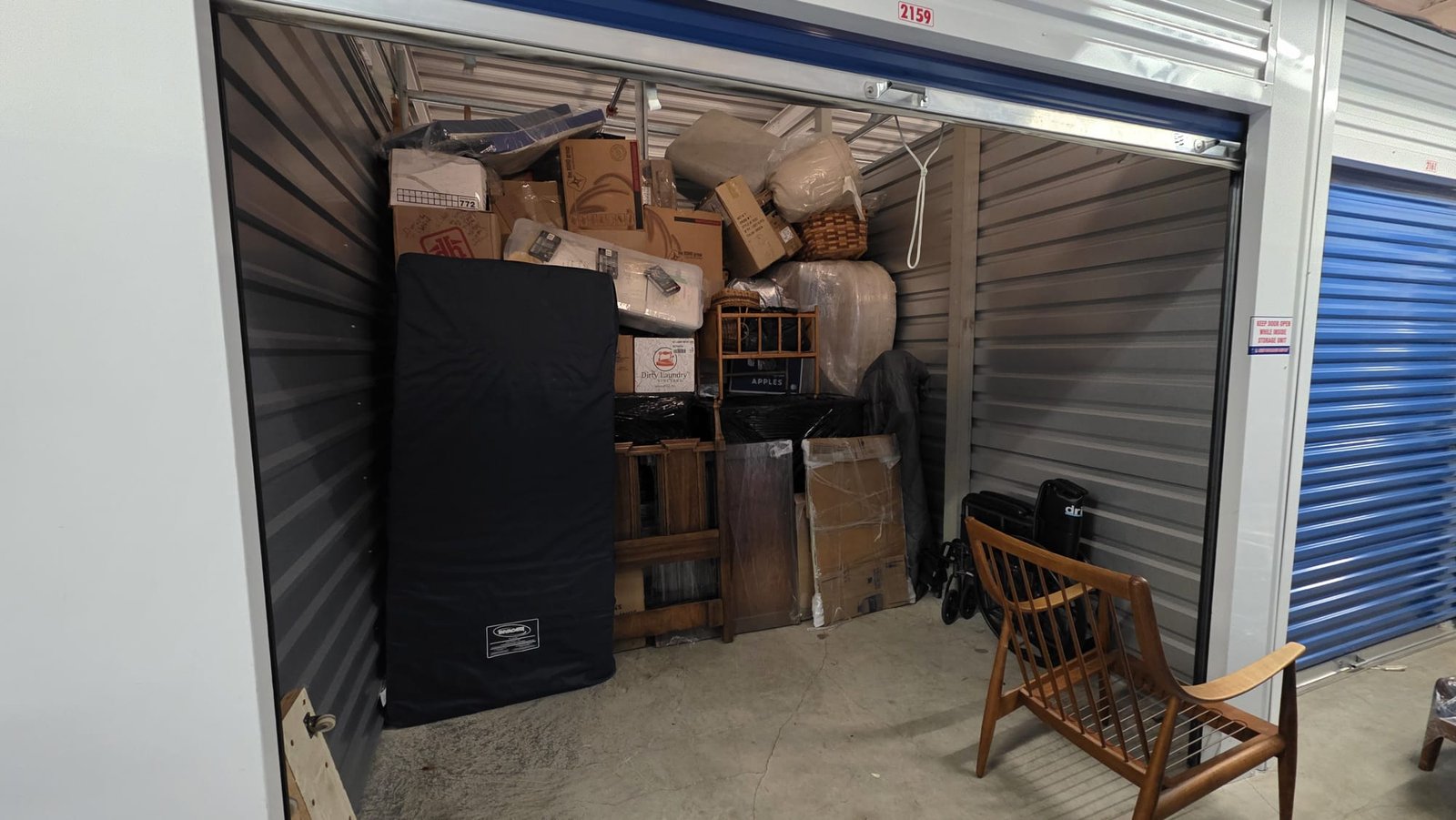
Storage in transit is short-term storage of your shipment that does not exceed 60 days. It carries additional charges and has to be requested by you, so it never appears on a job by accident. If your dates do not line up, we write it into the quote before anything is stored. For anything longer, our storage service takes over.
A 4.9-star record across 102 reviews
“On time, careful with every piece, and the price was exactly what they quoted. They rebuilt the bed and placed everything by room.”
“Booked the elevator, pulled the parking permit, and wrapped everything. A downtown move with zero stress.”
“Answered the phone at night when I called last minute. Same crew start to finish, and they took the paper away after.”
Frequently asked questions
How long does a move from Vancouver to Toronto take?
The all-Canada road route runs about 4,408 km and about 58 hours of driving. Federal rules cap a driver at 13 hours of driving in a day, so the driving alone is a minimum of five days before loading, unloading or any weather hold. We agree a delivery date spread in writing and never promise a single date.
Which highway do you take out of Vancouver?
It depends on the destination and the forecast. Highway 1 runs through the Fraser Valley to Hope, up the Fraser and Thompson canyons to Kamloops, then east over Rogers Pass and Kicking Horse Pass. Highway 5 is the 543 km link north to Highway 16, the shortest land connection between Vancouver and Edmonton.
What happens if the highway closes for avalanche control?
Parks Canada controls about 40 km of the Trans-Canada Highway through Glacier National Park, with 135 avalanche paths and 16 gun positions. Roughly 100 hours of closures happen a year and most last 4 to 8 hours. We build that into the window and call you the moment a hold starts.
How much does a cross Canada move from Vancouver cost?
It depends on the size of the shipment, the access at both ends and the destination. Tell us both addresses, your room count and your dates, and you get a clear, no-obligation quote agreed up front and put in writing before we start.
What paperwork should I get before the truck leaves?
The Bill of Lading, which is the receipt for your goods and the contract for their transportation, plus a tagged inventory listing every item and its condition. The Canadian Association of Movers puts it plainly: never allow a mover to begin work without paperwork. Long-haul paperwork should also carry the anticipated delivery date spread and contact information for everyone involved in carrying the load.
Is winter a bad time to move across Canada?
It is a different job, not an impossible one. Winter tire and chain signs apply across BC from October 1 to April 30, and Rogers Pass requires mountain and snowflake or M plus S rated tires from October 1 to March 31. We plan winter hauls with more slack and a second route in hand.
What if my new place is not ready when the truck arrives?
That is what storage in transit is for. It is short-term storage of your shipment that does not exceed 60 days, it has to be requested by you, and it carries additional charges we write into the quote before anything is stored.
How do I file a claim if something arrives damaged?
Check your items off the inventory as they come off the truck and write any damage onto the work order at that moment, not later. Walk the new space and the truck before you sign the delivery documentation. Claims often must be made within 60 days for a long-distance move, so keep every document you are given.
Can you start a cross Canada move on short notice?
Often yes. We run 24 hours a day, 7 days a week from 422 Richards Street in downtown Vancouver. A long haul still needs a load day and a route plan, so the sooner you call the wider your choice of dates.
Tell us both addresses, your room count, and the dates you are working with. We come back with a route, a delivery window that respects the legal driving day, and a no-obligation quote in writing before you commit. Tagged inventory at loading, a copy in your hands, and a phone that answers at any hour. Same crew standard in every area we serve.
4.9 stars across 102 Google reviews. Moving people since 2010.
Areas We Serve
Other Moving Services
Long Distance Moving · Shared Moving Vancouver · Packing & Unpacking · Local Movers Vancouver · Storage Facility Vancouver
Areas we serve across Vancouver
We load and unload across Vancouver, from Downtown and the West End to Mount Pleasant. See every area we serve.
Want the bigger picture? Browse all our moving services.
Ready to book your move?
Get a free quote with the plan and the price agreed before we start.